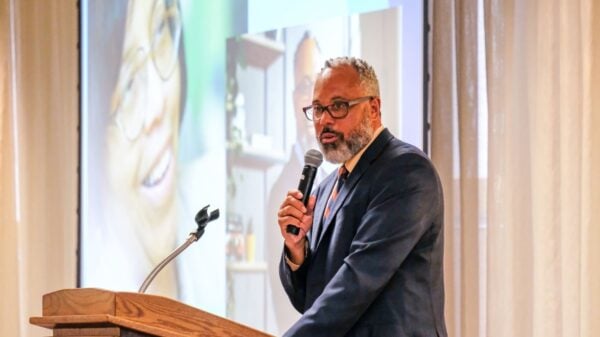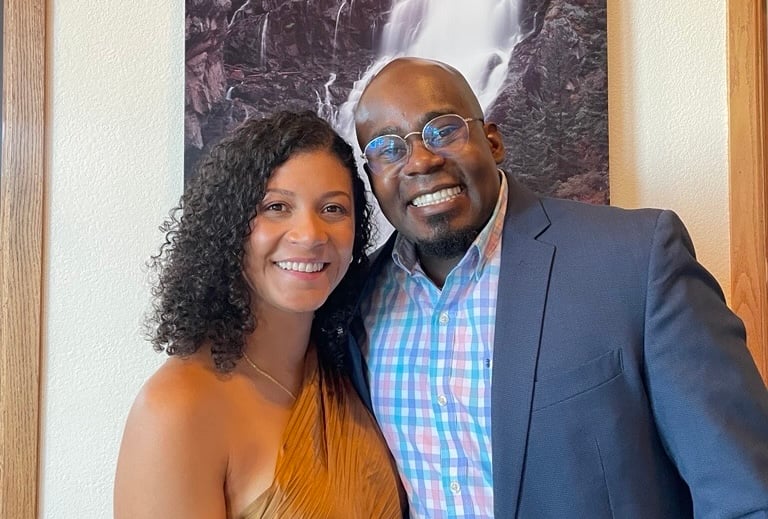
If you live in Gunnison, work at the University or are a fan of good food, frozen yogurt and good company, then you have heard of Jermaine. He is a household name around here, but not many people know about his humble beginnings, the drive behind his businesses or even his last name.
Recently, I had a chance to talk with Jermaine and learned so much about the man, the myth, the legend. Did you know Jermaine grew up in rural Jamaica? In fact, his commute to university involved leaving home at 4:30 am for nine-mile walk to the nearest town to catch a taxi, followed by a bus ride to Kingston, and finally another taxi to school. Jermaine made this commute five days a week, there and back.
Eventually, he made his way to Gunnison on a J-1 visa and discovered Western during a trip to the University Center theatre. After completing his degree in Jamaica, Jermaine returned to Western to earn two more degrees, eventually graduating in 2014.
But what makes Jermaine stand out most is that his entire journey has been centered around building community. When speaking with him, it is evident that he rejects the notion of being self-made. And while it is often said that “it’s not what you know, but who you know,” Jermaine takes that idea a step further. For him, community is not simply a pathway to opportunity; it is the driving force behind his decisions.
Mister Nice Guy Coffee began to support coffee farmers in his home community in Jamaica while also providing breakfast to local schoolchildren. After hearing about the suicide rates among teens in Gunnison, he created Jermaine’s as a safe space for young people. Other ventures have grown from a need for transportation during the pandemic, a desire to create spaces for adults to connect and opportunities to bring new food and gathering places to the Gunnison Valley.
Planting seeds, as Jermaine puts it, is only the beginning. The real work is nurturing them, watching them grow and making sure they become something that benefits the community around them.
Here are the highlights of my conversation with Jermaine:
How did Western have a lasting impact on your career and your life?
I don’t think it’s the degrees that shaped my career. I think it’s the connections that I made while I’m here that shaped my career.
People associate things with getting them places, but things in its essence are just things. It’s the people and the connection, it’s your community that you surround yourself with that helps you to get from one place to the other.
I do have a lot of people that helped me here and have lifelong impact on me and my career. John Peterson, my computer science professor, he passed away. Don Schuster, another computer science professor.
And not just professors. I had some great connections at Western, from my peers in IT to Academic Affairs, to Student Affairs, to Financial Aid, to the Foundation. I’ve met some amazing people that helped me to understand what it is to show kindness when it’s not even deserved.
And that is what keeps me going, because sometimes people don’t deserve it, and I didn’t either, but it was definitely shown to me.
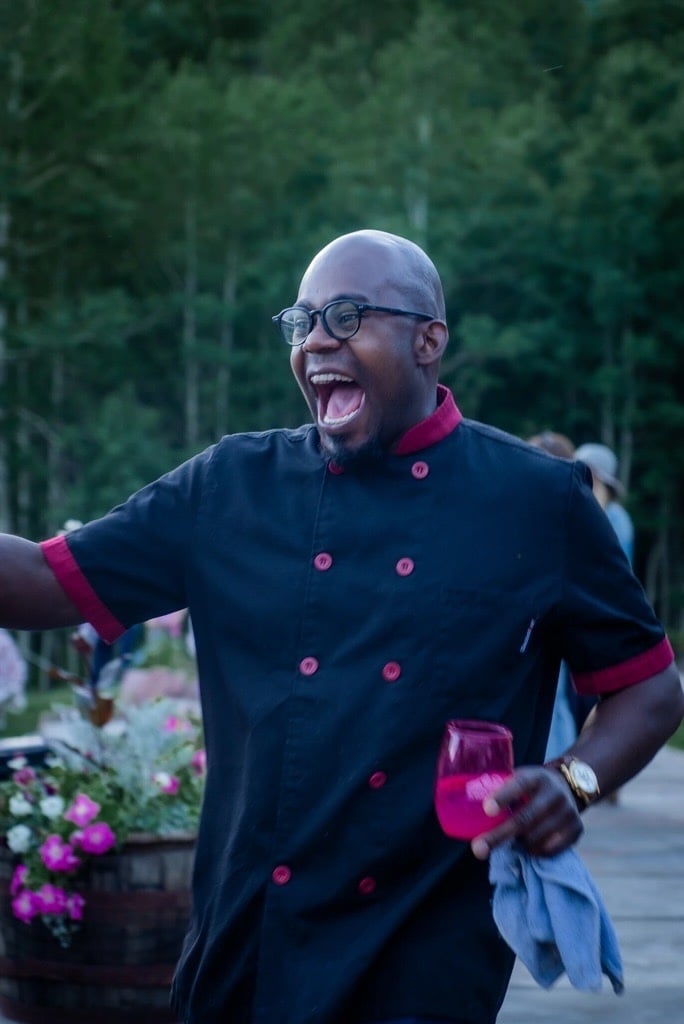
When you think back on your time at Western, what’s the first memory that comes to mind?
There are a lot of memories that come to mind.
One of my coffee tastings was done at Western for my Mister Nice Guy Coffee Company with the Sodexo crew. That was amazing. That was a great time because we had the president all the way down to students tasting MNG coffee.
I got the opportunity to wear the mascot costume at Western while leading the Running of the Red. That was the best!
There’s just so many memories that tie into Western and are still a part of my life today. And still, I’m still growing, still developing memories.
Tell us about MNG Coffee and where that came from.
I grew up in rural Jamaica, deep rural Jamaica, in the mountains. Growing up there, I was surrounded by coffee. My dad, my mom, my grandma, my grandfather, my great-grandparents, they all had farms that had been passed down from generation to generation. I saw the struggles of farmers, where they work extremely hard and still can’t buy food for a week. So I really wanted to have some kind of local impact in my community, and I decided I wanted to do something with coffee. The result was MNG Coffee.
In 2009, when I first came here as a J-1 student, I brought coffee with me. Instead of bringing clothes and all that stuff, I used my 50 pounds to bring coffee. And I did another suitcase with another 50 pounds. I brought those here and tried to build a market from that.
With the help of Daniel Whitten, MNG Coffee quickly took off. We were able to launch a breakfast program in Jamaica where we could feed 54 kids at the primary school I grew up going to. To this day, we still do the breakfast program in Jamaica.
That’s how MNG Coffee came about — through connections at Western to other folks in Denver.
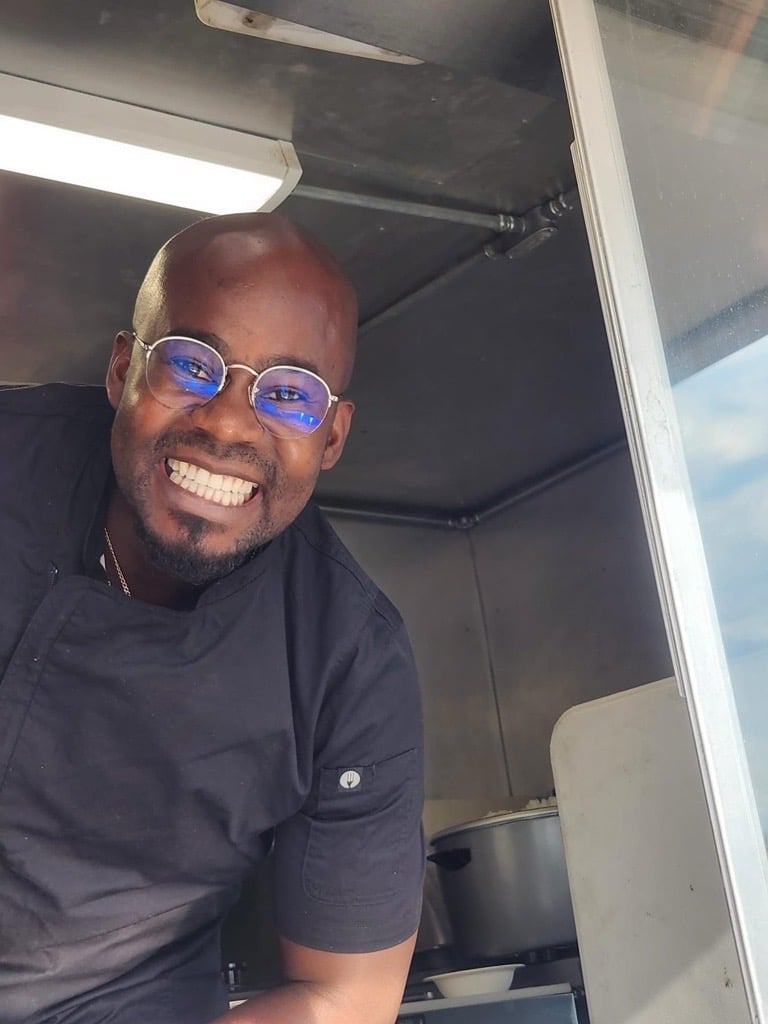
You’ve built a number of businesses since then. What drives you to keep creating, and how does community fit into that?
It’s funny because you can’t do anything without people.
No matter who you are or what you’re trying to do, if you’re not bringing community and people along with you, I don’t think you would be successful.
MNG Coffee was created to provide a reasonable price to the farmers in Jamaica for the products and feed healthy breakfasts to kids. Jermaine’s was created to provide a safe space for the youth in the Gunnison Valley. Old Miner Steakhouse came about because I wanted the local community to have a restaurant to celebrate the big moments in life, share good food and good company. You don’t have to drive north to find that.
You’ve achieved some remarkable milestones. Is there a moment in your career that still feels surreal when you think back on it?
I think it’s the expectations from people for me. I am often told “Well, you don’t act like the owner…” or “You don’t seem like the owner…”
I think there’s a disconnect on what success actually looks like and what it actually is. I’m not afraid to get my hands dirty. I’m not afraid to do anything my staff does. And I have 78 employees. I can do, and I will do, everything that I’m asking them to do. I’ll be out at my liquor store picking up bottles. I’ll be behind my line cooking. I will be serving if I need to. I’ll be bartending if I need to. Whatever it takes, I just want to be there for my people.
We are all equal people trying to go through this crazy world together. And it’s hard and it’s difficult out there. And there’s no need to make somebody’s life any more difficult or make somebody feel less than.
The moment we can stop pretending or making ourselves look or feel any better than somebody else, I think the better off we will be.
What made you want to invest in Gunnison the way you have?
I have received a lot of business opportunities outside Gunnison that would be so much more than I could ever ask for. But this is my home. This is the first place I’ve come.
Despite the struggles that came with coming to a new place, meeting new faces, no family at all here, you find comfort in your surroundings. You find confidence in the people that surround you, and you build this circle around yourself and now that circle makes it kind of like a supernatural environment.
It’s not about a fear of losing that, not at all, because if I build it here, I can build it somewhere else too. But the important part about it is, what kind of life am I living for just planting these seeds and let them germinate and just abandoning them? Or do I plant these seeds, germinate, and then foster them? Because the moment I leave, I’m going to leave a lot of people behind.
Yes, opportunities are out there. They’re endless. And I can still build a community elsewhere, which I’ve done. Things always change and I’m always open to options, but if I must choose, I’m going to be here.
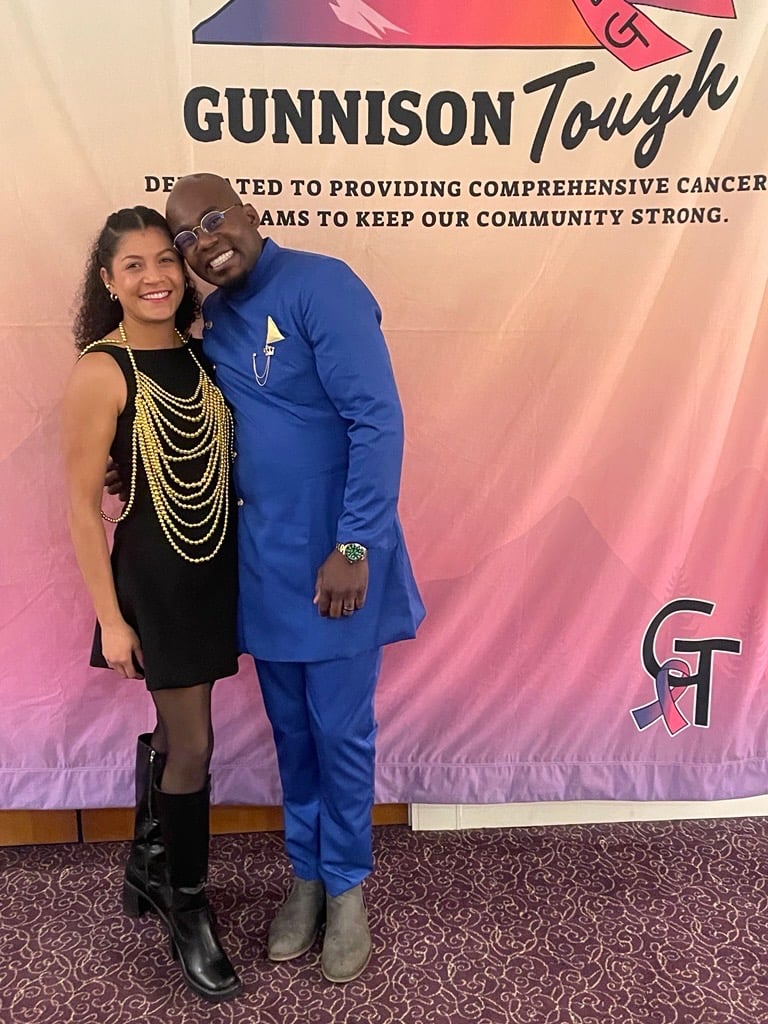
I have to ask, what was your first winter in Gunnison like?
While I was here on a J-1 visa, I was telling people before I went back home that I was thinking about coming back for the winter and starting school in January. Everyone told me I was going to love it but not one person talked about the winter. So, I applied to Western, I got accepted and got excited to move here October 27th of 2011.
I landed in Denver and took the bus to Gunnison. On the bus, you see the white stuff on top of the mountain, and in my head I’m like, thank goodness, that’s not in Gunnison. The final stop for the bus was the gas station in Gunnison. The bus driver woke me up and said, “Hey. You’re here.”
As I looked outside, the ground was covered in snow. I’m in a white T-shirt and flip-flops because I’m coming from Jamaica. I knew the weather that I left, so I know what to expect because I’ve been doing this for three years. I looked outside and looked back to the driver and I was like, “Yeah, I’m going to Gunnison.” And the guy said, “You are here.” The gas station looks familiar, but the ground doesn’t look familiar.
My goodness, my first winter I got a nice welcome surprise. I broke my fibula three different places, dislocating my ankle and cracked my fibula vertically. A year later, I had to get an ACL replacement and a meniscus repair because I think that all got damaged too. So, it was fun stuff, I tell you.
What’s something people might be surprised to learn about you?
Most people don’t even know my last name. People know me as Jermaine. They see that and, if I could take a poll in Gunnison, less than 1% would know my last name.
But I think the fact that I didn’t talk until I was 11 years old will surprise a lot of people. I had a severe speech impediment. Very, very bad speech impediment.
What does receiving the Pathfinder Alumni Award mean to you?
Honestly, first of all, I was not expecting to be a recipient of this.
When I read the comments regarding whoever made the nomination, I looked at it and the first thing that came to my mind was, “Wish my family could be here to see this.”
That was the first thing because I’ve been fighting this battle. I wouldn’t say fighting alone either, but my mom never visited, my dad never visited, my grandma never visited. I have no ties here in Gunnison, per se, but it is my home. It’s hard for them to understand, especially my grandma, because when you say, “Oh, I opened up a shop,” in Jamaica that means something completely different from what I did here when I opened Jermaine’s. I remember when I told her that I opened Jermaine’s, opened a café. She had no idea what I meant so I said, “It’s like a shop.” I’m pretty sure she thinks that I have a four-wall structure that I put a little roof on, and I go to the grocery store to stock it. I wonder if they could see this and see everything from a different perspective. How would that make them feel?
That was the first thing that came to my mind. And then the second thing was, I could have done more. I feel like I could have done a little bit more for my community. And then at the same time, I’m grateful that somebody sees the effort that I’m putting in.
It’s a series of mixed emotions of gratitude and of missing my family.
When you think about the legacy you’d like to leave, what do you hope people will say about the impact you’ve had?
I had an interview with a professor that’s writing a book. In the book he highlighted the fact that once you reach a certain position in life, you become elusive. You don’t do what you normally did. You don’t go places you normally go. You don’t connect with people that you usually connected with. There’s a lot of “don’ts” in there. And that’s when he came and interviewed me. And he said, “What kind of person do you want to be?”
I don’t care about where I’m at. I just want to be the guy that somebody can always call and know that I’m always going to be there. Period. No matter the time, where I’m at or what I’m doing, I’m going to be that guy.
That’s important to me because I’m coming from a family that struggles a lot. Because of our economic standpoint, when we went to buy food for dinner, we used to buy a pound of rice, a tin of sardine, a big jar of oil or a quarter stick of butter. But being the first person to attend college in my family, I was determined to pull my family out of this.
But I also saw what it is to be successful and what it is like to be pushed aside and left behind. I lived that. I lived pushed aside, left behind, and you are less than and I will never intentionally make somebody feel like that, no matter where I’m at in my life. And I’m very conscientious about it.
I want to be the kind of person that will leave people feeling like they had my full attention. They felt like they had a true connection with me. They feel like they can call on me when something goes haywire. They feel like I’m always there when they need it the most. I want to be the thing that my family didn’t have.
When you find people that may be going through something, leaving with the statement, “You know that I’m always here,” sometimes is more impactful than you could ever think.
Just offering a helping hand, just to say, if you need somebody to hold on to, I’m going to be here for you.
So…
That’s me.
Author Credit: Seth Mensing