Students in Western’s philosophy program have spent years asking the big questions. A new master’s degree will ask them to do something with the answers they find.
Long before the graduate degrees and book deals, Dr. John Hausdoerffer (’96) arrived at Western with a love for the mountains and an appreciation for the intellectual life. And at first, love won out.
Then, during his first semester, he took a class with political philosopher Paul Lowdenslager that changed everything. “I changed my major that day,” Hausdoerffer said. “I went to my roommate, who was my cousin, and I said, ‘I’m going to be a philosophy professor here.’ And he just thought that was so funny.”
His cousin wasn’t laughing for long.
By 2001, Hausdoerffer had earned his master’s and was teaching at Western, earning his PhD in 2004 and beginning his current position in 2005. The philosophy program he remembered had been discontinued in the late ’90s, so he taught history, political science, and environmental studies, while building a reputation as a scholar specializing in environmental ethics.
Along the way, Hausdoerffer helped build some of Western’s signature environmental programs. He was the founding dean of the Clark Family School of Environment and Sustainability and helped develop the Master in Environmental Management (MEM) program.
Eventually, he got the chance he’d been waiting for, creating a Philosophy 101 course that students in any major could take. And take it, they did. From that one course’s success between 2003 and 2006 came the return of the philosophy minor to Western in 2007, which Hausdoerffer co-designed and launched with now-retired philosopher Dr. Anthony Miccoli.
Miccoli led the program from 2008-2023, while Hausdoerffer built the Clark School of Environment & Sustainability and returned to philosophy in 2023 following Miccoli’s retirement. Since then, Hausdoerffer has enjoyed cultivating this new era of philosophy and ethics with cross-disciplinary professors—Drs. Mike King, Julia Speed, Tyson Hausdoerffer, Matt Van Cleave, Zach Treisman, and Maria Struble.
To understand why Western students have supported the philosophy program to the extent that they have, Hausdoerffer needs only consider a younger version of himself. Western students, he said, have an independence that often translates into a willingness to take intellectual risks, ask difficult questions, and explore unfamiliar ideas.
But more often, Western’s philosophy students are being asked to turn their ideas into action. So Hausdoerffer is turning his attention back to an old idea.
A Philosophy of Doing
Starting in fall 2027, Hausdoerffer is mixing the core of his philosophy curriculum with the applied learning that helped make the MEM program a success to create Western’s new Master of Applied Ethics (MAE) program.
And he’s focused on some of the oldest questions humans have asked: What is the world? Who are we? What makes a good life?
To get there, students will spend the 15-month program studying plenty of Plato, Aristotle, and Simone de Beauvoir, to be sure. But it will be alongside Indigenous, African, post-colonial, and environmental thinkers who bring different ways of understanding the world into conversation.
Then the program moves into what Hausdoerffer calls “praxis,” or putting ideas into action.
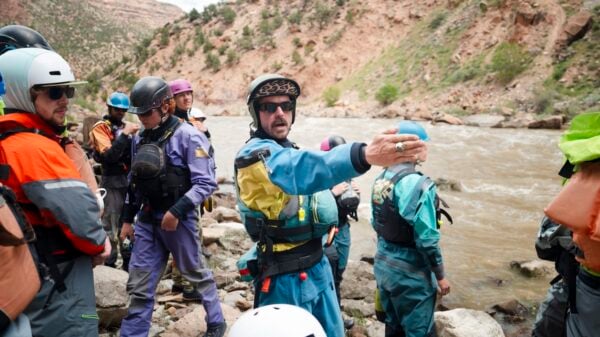
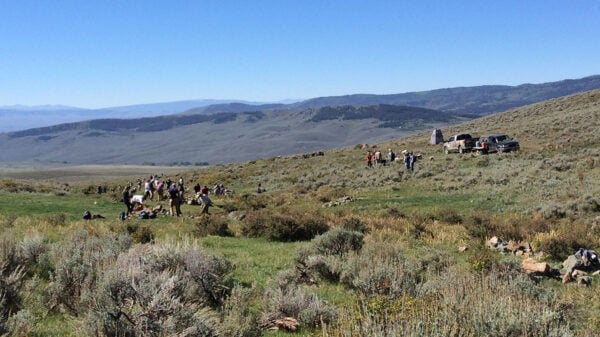
Students learn to look at a community as a kind of text, reading the values expressed in the way it treats land, water, food, public space, and one another. Then they work with organizations like food banks and community gardens, as well as local governments and businesses, to contribute an informed, ethical perspective to the decision-making process.
The idea echoes the model Hausdoerffer helped establish in the MEM, where graduate students have contributed thousands of hours to organizations and communities through applied projects rather than traditional theses. The MAE takes that philosophy one step further.
A Workshop for the Rest of Your Life
For all its philosophical underpinnings, Hausdoerffer describes the MAE less as a conventional graduate degree than as “a workshop for people trying to align their livelihood with their values.”
He’s heard enough stories from former students who have found themselves on one side or the other of an uncomfortable divide. Some make a good living doing work they don’t really believe in. Others find work they care deeply about but struggle to make a living doing it.
The MAE is designed for people looking for some middle ground.
Open to students from any undergraduate discipline, the program starts with a summer examining ethical traditions from around the world. Then students move into applied ethics, taking on contemporary ethical challenges. In the spring, they add social entrepreneurship, based partly on the premise that the job they want may not exist yet, and that they might have to create it.
The final summer puts students inside an organization related to their interests, giving them a chance to try out a possible career while still doing meaningful work.
And there are people willing to bet that kind of experience has real value.
One anonymous donor has already committed about $1.7 million to get the MAE off the ground and support a handful of students who are willing to go a step beyond the big questions and do something about it.
That might be especially valuable now.
Checking Our Bearings
At a time when artificial intelligence can perform an expanding list of technical tasks, Hausdoerffer believes that deeply human qualities like curiosity, creativity, judgment, intellectual humility, and empathy will only become more valuable. And he says some of the most important questions surrounding AI were philosophical long before they became technological.
What is intelligence? What constitutes knowledge? Who bears responsibility for a decision? Philosophers have been wrestling with versions of those questions for a long time. And now, more and more, similar questions come up in business, health care, public policy, science, and pretty much every other domain.
Hausdoerffer thinks philosophers and ethicists need to participate in those conversations while new technologies and ideas are being developed, instead of trying to pick up the pieces after the damage is done. That may help explain why a discipline with roots stretching back thousands of years feels unexpectedly well-suited to this moment.
Plato once compared philosophers to navigators studying the stars while helping guide a ship. To everyone else on deck, the navigator might appear to be staring into space. But movement alone doesn’t tell anyone whether the ship is headed in the right direction. And the navigator might be the only one who knows it.
And with the MAE, Hausdoerffer hopes to help students do more than choose a destination. He wants them to steer the ship that will get them there.
Author Credit: Seth Mensing