How Western students helped build a whitewater park, launched a festival, and made the case for the value of river recreation
For years, the stretch of the Gunnison River below Twin Bridges had been forgotten, tucked between a water supply building and the end of the airport’s main runway. The riverbank was littered with old tires and broken TVs. But by the late 1990s, people in the Gunnison Valley had started to look at that neglected stretch of river, and every drop of water in it, a little differently.
For more than a decade, they’d been fighting interests that wanted to take water out of the Gunnison Basin and move it across the Continental Divide. The most ambitious of those efforts was the Union Park project, which envisioned a reservoir near Taylor Park that would be bigger than Blue Mesa and provide water to cities on the Front Range.
But the community, led by several prominent Mountaineers, stepped in to stop it. Marlene Zanetell (B.A. ’68, M.A. ’71), the first woman to serve as a Gunnison County commissioner, helped organize local opposition, and Richard “Dick” Bratton (’54) was the attorney arguing the Upper Gunnison River Water Conservancy District’s case before the court.
Stopping Union Park, however, didn’t mean Western Slope water was safe. Another, similar proposal could be made at any time. If the Valley wanted to keep more water in the basin, it had to make a case for why it belonged here.
One way was to demonstrate the value of recreation on a healthy river, and in 1997, Gunnison County committed to building a whitewater park on that neglected stretch of the river below Twin Bridges.
They enlisted Gary Lacy, one of the pioneers of whitewater park design, to build the waves, and Western professor Dr. Mark Gibson to help with the land-based park features.
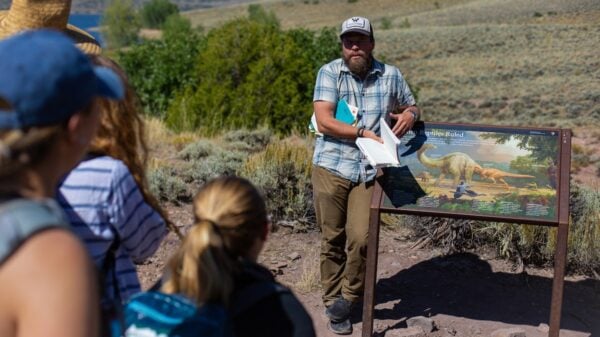
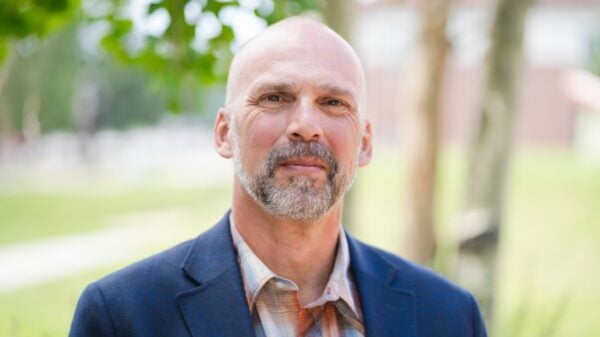
Gibson was a river runner and Recreation and Outdoor Education professor with an abiding love of water conservation. He created a special topics course called Whitewater Park Design and Development, and a student named Bob Jones was one of the first to sign up.
Jones had recently returned to Western after taking time off to climb mountains and run rivers in Alaska. He had also helped organize the first Elk Mountains Grand Traverse a few years earlier and knew how to find sponsors and organize people around an idea
Jones and his classmates attended County commissioner meetings and became part of the public process surrounding the park. While engineers worked on waves in the river, the students turned their attention to the trail, picnic areas, and other amenities that would make the park a place people would want to stay and enjoy the river.
“I actually wrote the grant that built the bathroom and changing room facility,” Jones said.
But building a place where people could play was only part of the idea. If the park was going to demonstrate the value of keeping water in the river, people had to use it.
So the class threw a party.
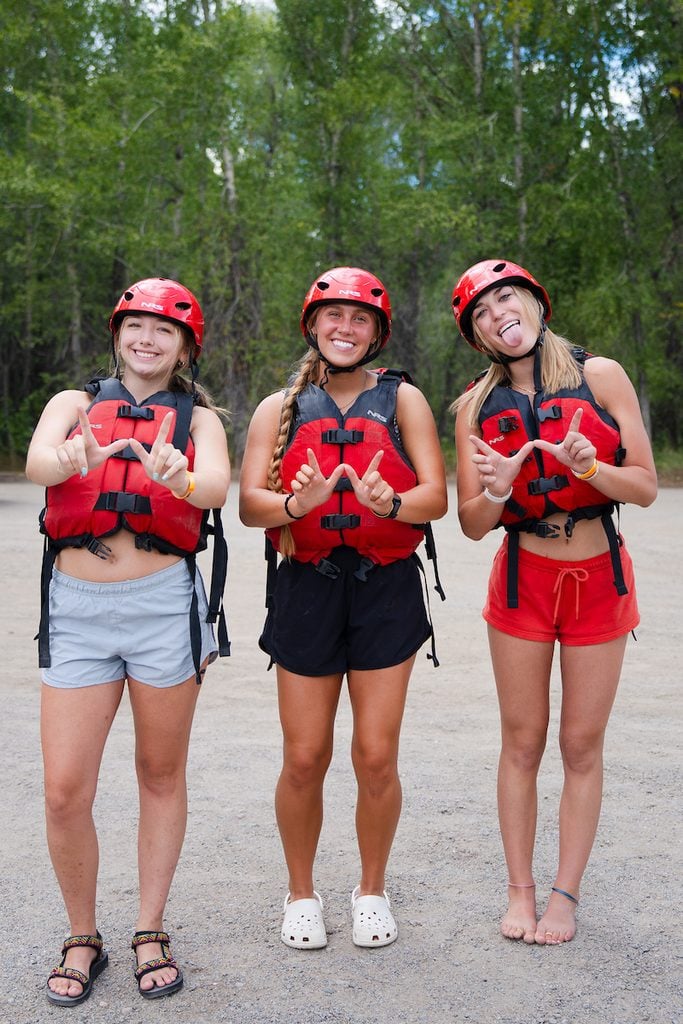
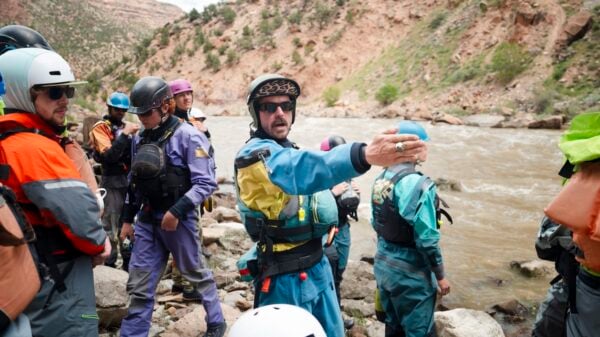
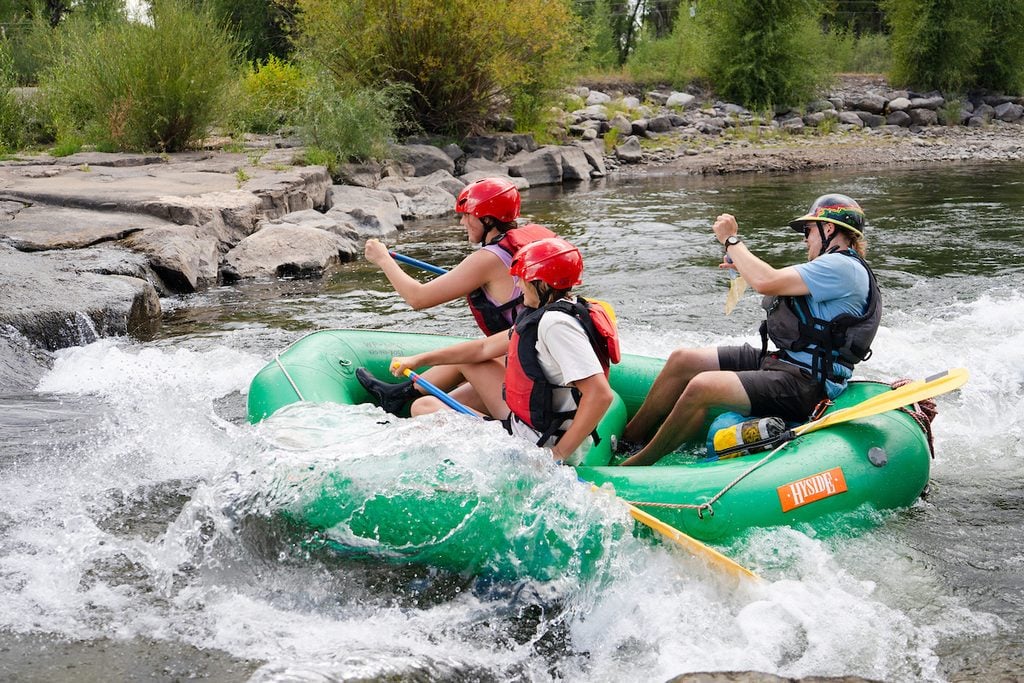
Jones led a team of students who looked to FIBArk, the long-running whitewater festival in Salida, for inspiration for the first Gunnison Whitewater Festival in 2002. There were kayak competitions, downriver races, hooligan races, and a foamy boat race to make the new park a place for everyone to celebrate the resource.
And people showed up.
Every kayaker in the river, every spectator along the bank, and every person who came to Gunnison for the event helped demonstrate that water flowing down the river was being put to beneficial use. And that argument was about to be tested in court.
After the state initially denied the county’s application for a Recreational In-Channel Diversion specifically for the whitewater park, Gibson worked with the Upper Gunnison River Water Conservancy District and its attorneys to prepare testimony that would help establish a “reasonable recreation experience” standard.
“The basis for it was trying to demonstrate that recreational use is as important as other uses,” Gibson said.
Soon, the RICD for the whitewater park was granted.
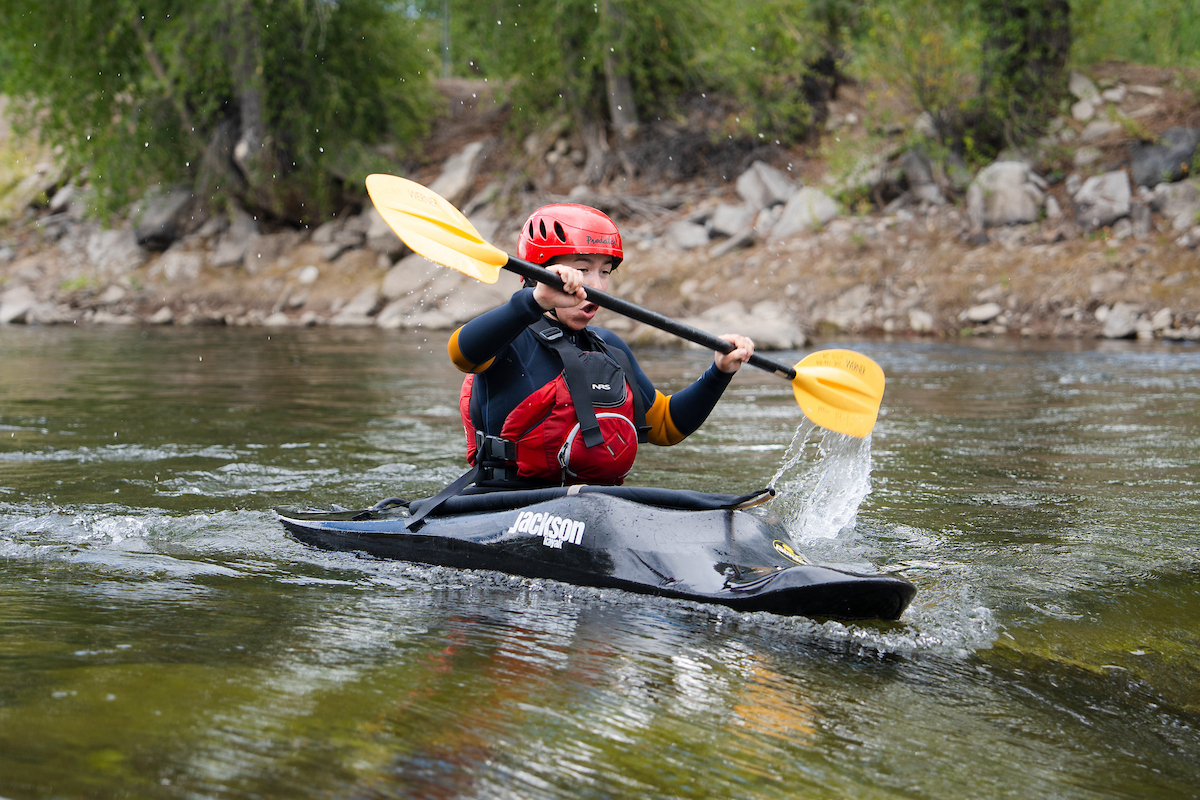
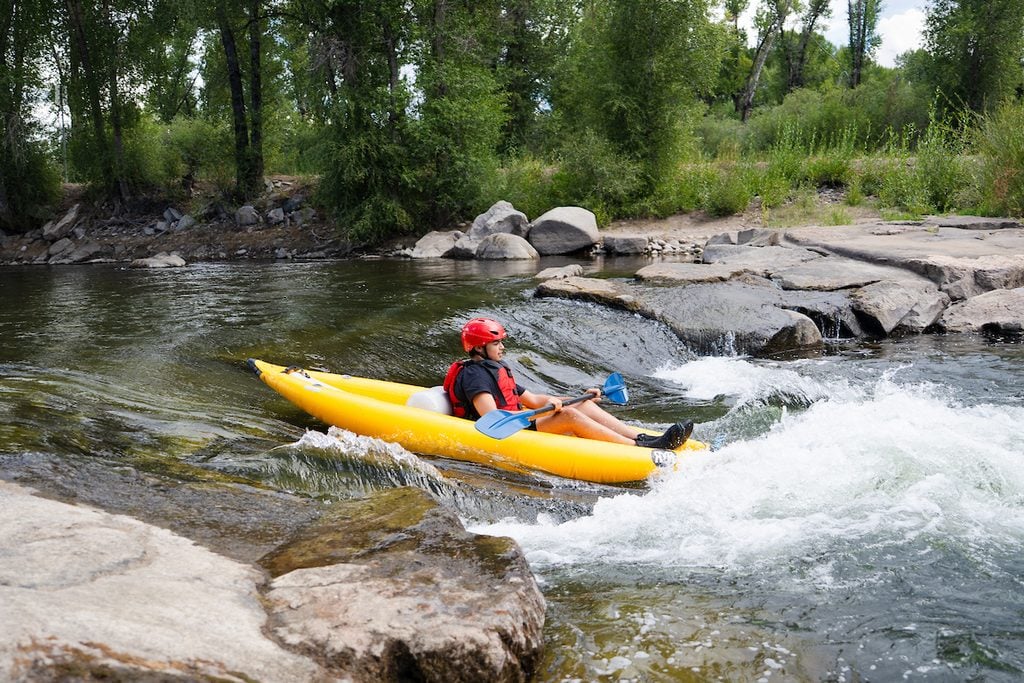
Now, more than two decades later, the park has become such a familiar part of Gunnison that it can be easy to forget where it came from. People and dogs walk the trail. Students in middle school through Western paddle through the waves. And every spring, when runoff fills the Gunnison, people go to the Festival to support the community and celebrate the river.
And that was the point all along.
Author Credit: Seth Mensing