Tropical Storm Melissa wasn’t yet one of the most powerful storms ever recorded in the Atlantic Basin. But in late October 2025, it was about to be.
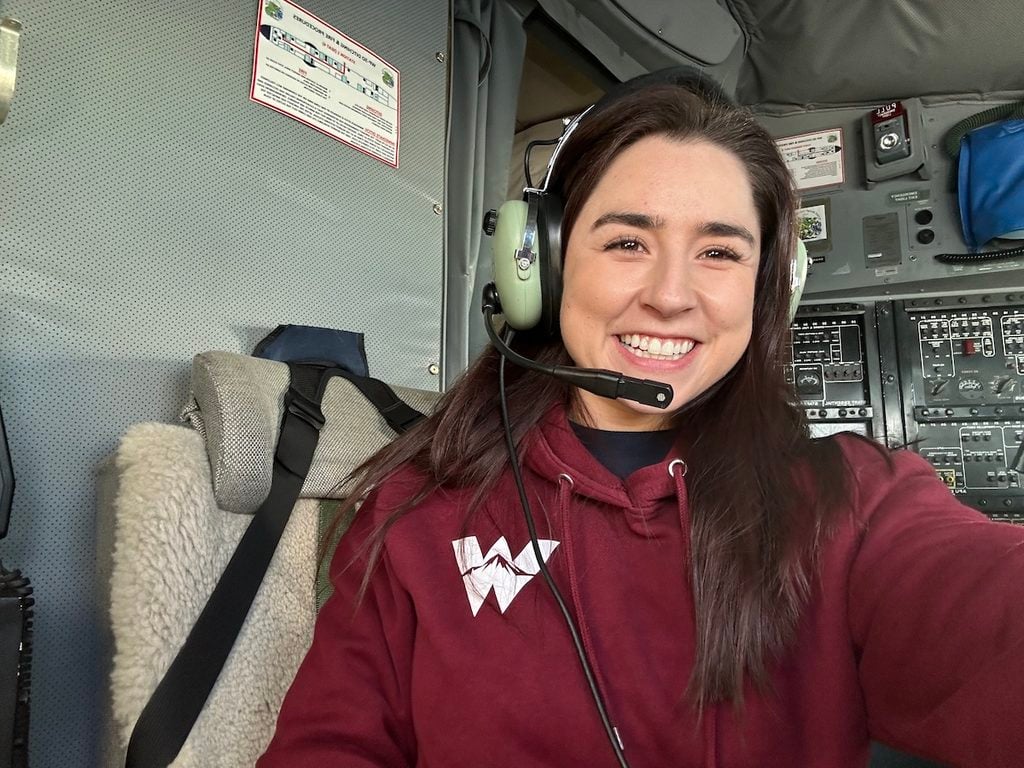
Just days before the eye of the storm formed, Autumn Moya (’21) sat in the jump seat of a NOAA Hurricane Hunter turboprop as it climbed toward Melissa’s dense, gray underbelly. From the cockpit, she watched the sun kiss the edge of the tempest, casting a brilliant golden glow across the clouds. It was one of the most beautiful sunsets she’d ever seen, such as it was.
Then everything went black.
Sheets of rain pelted the windshield, and bolts of lightning brought the chaos around her into view. Turbulence tossed their plane like a ping-pong ball in a bingo machine. But the NOAA Hurricane Hunter pilots were completely unfazed. For them, it was just another day at the office.
“That’s their bread and butter,” Moya said. “The brave pilots I met as a guest rider absolutely love flying into these storms.”
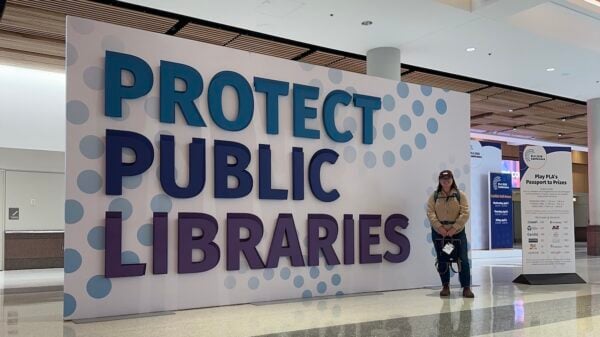
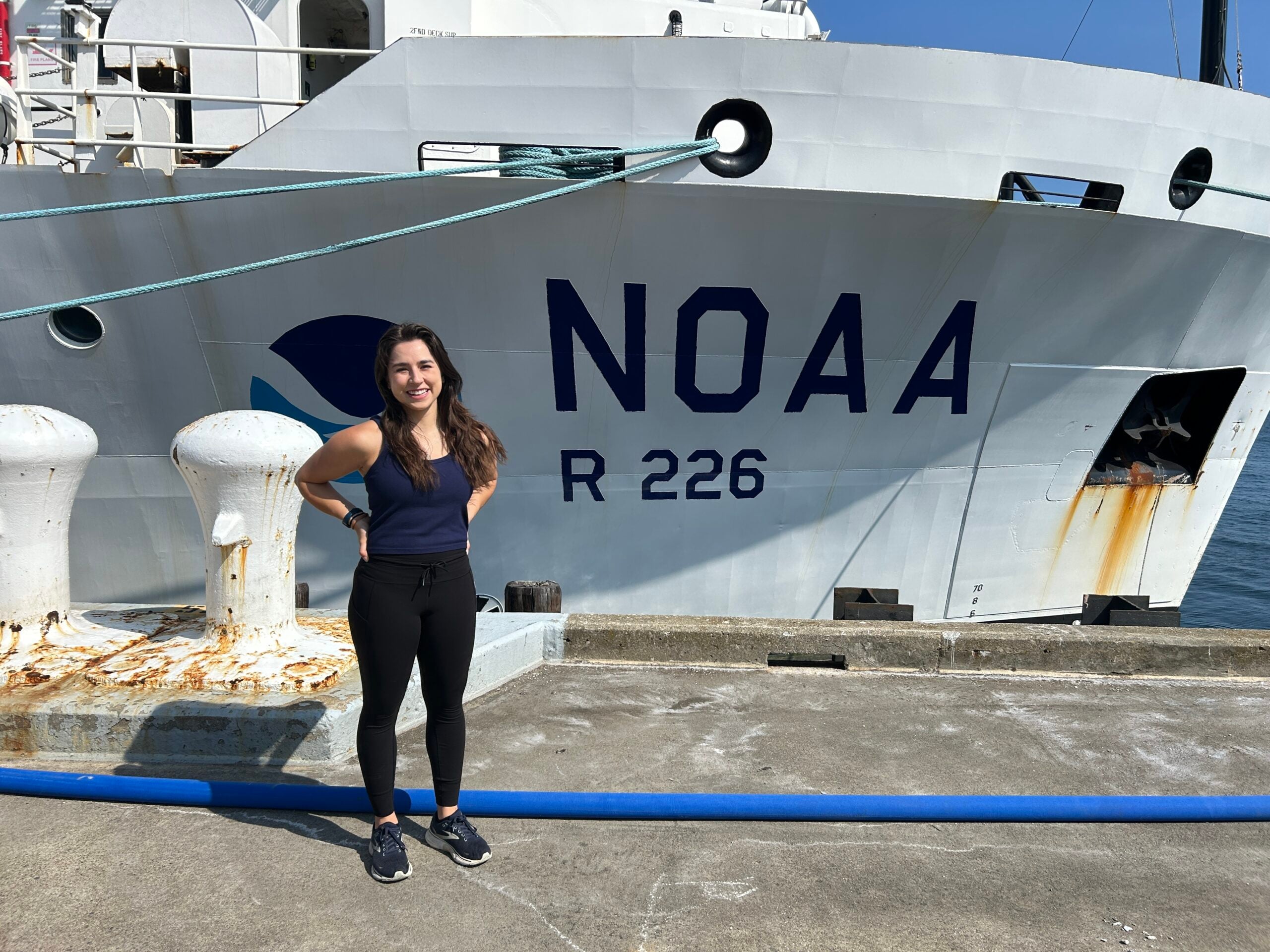
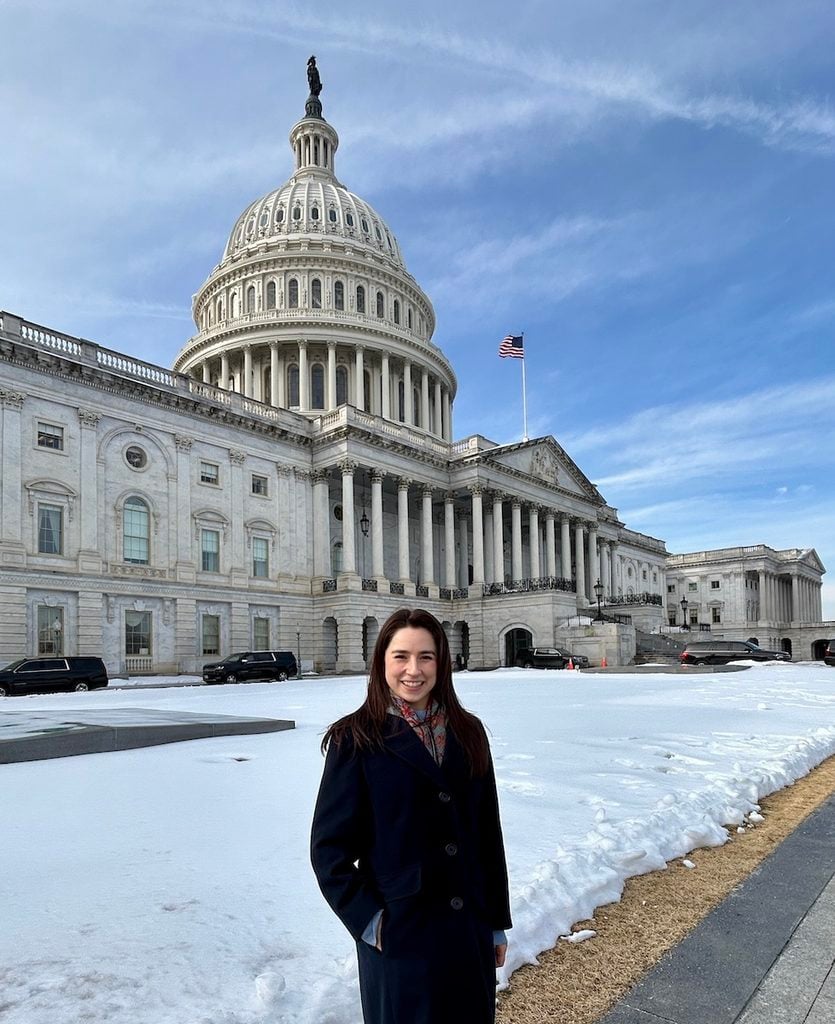
Back on the ground, Moya wanted to stay at NOAA’s Aviation Operations Center in Florida long enough to see Melissa form an eye. Instead, she had to leave the storm behind and head back to Washington, D.C., where her work as a Knauss Fellow at NOAA took her into the path of an entirely different kind of storm – the kind found on Capitol Hill.
And both were a long way from where her fascination with the ocean began.
Where does it end?
One beach vacation was all it took for a ten-year-old Moya to realize she wanted to spend the rest of her life studying the sea.
“I do remember being a little scared and daunted by the vastness of it,” she said. “I was just thrown off by its scale and thought, ‘Okay, where does it end?’”
It was a reasonable question for a kid from Greeley, Colorado, more than 800 miles from the nearest coast. She’d always loved books about the ocean and had a fondness for its residents. And seeing the vast unknown in person only fueled her curiosity. Still, she wouldn’t see the ocean again until college.
But first, college took her farther into the mountains.
Moya came to Western on a track-and-field scholarship, competing in sprints and jumps. She loved the community and the small school, but without a marine biology program, she enrolled in biology with minors in math and chemistry, hoping it would eventually take her in the direction she wanted to go.
For a time, she considered a career in medicine, unsure of the doors her degree would open. Then a track injury put her in and out of the hospital, where she learned she didn’t want to spend her career in one.
So she kept looking. And at Western, that was relatively easy to do. Moya remembers “bothering just about every single one” of her professors during office hours. Biology professor Derek Houston, her advisor, brought her into a stonefly research project, where she learned the rigors of fieldwork and DNA analysis and eventually became a co-author on the paper. Math professor Jeremy Muskat kept encouraging her to pursue math, even when she wasn’t sure why.
Other parts of her experience at Western were teaching lessons that were harder to put on a transcript. In the Honors and Academic Leadership programs, surrounded by students who were being encouraged to lead and believe they had contributions to make, Moya found a community outside the track team and learned to trust her own voice.
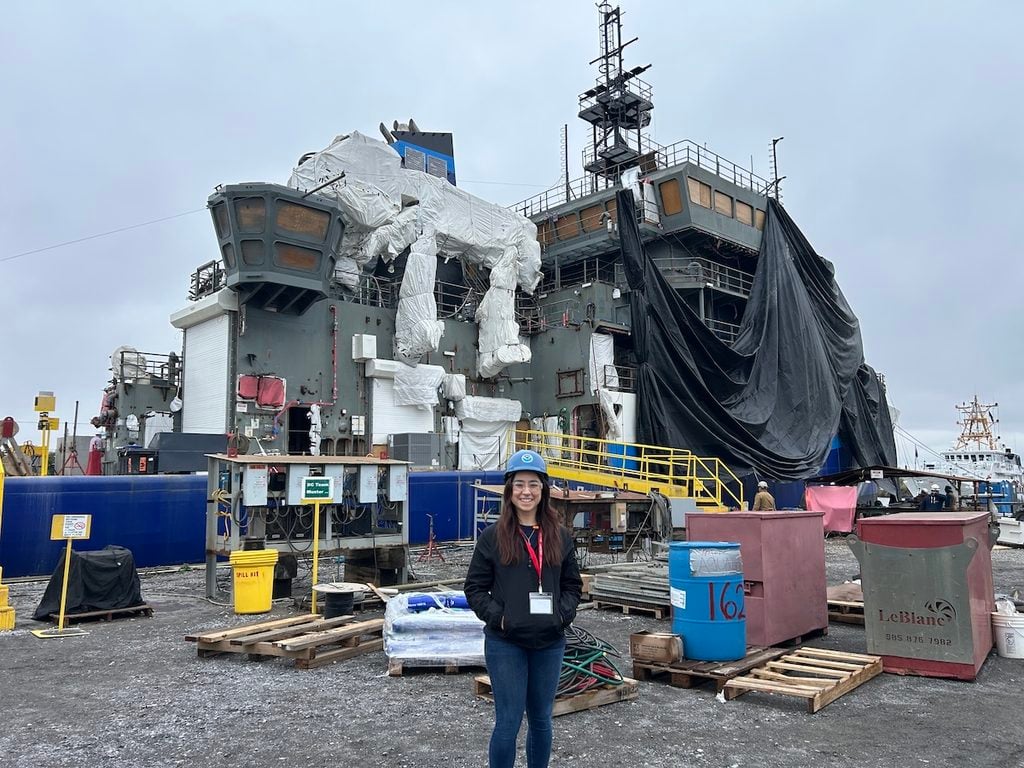
She wouldn’t fully appreciate those lessons until she found herself engaged in discussions on Capitol Hill. But first, she had to get back to the ocean.
In 2020, Moya had the opportunity through Western’s National Student Exchange program to attend the University of Hawai‘i at Mānoa, where she got an undergraduate research grant to work on a coral research project before COVID-19 shut the lab down. “It was still a really cool experience,” she said.
After graduating from Western in 2021, Moya began pulling on threads to see where they might lead.
At Curecanti National Recreation Area, she collected water samples from Blue Mesa Reservoir to help understand the effects of cyanobacteria on water quality. People concerned about warning signs posted for swimmers and dog walkers would stop and ask what the researchers were finding. “That was the first time I realized that I could be a scientist and still serve a community,” she said.
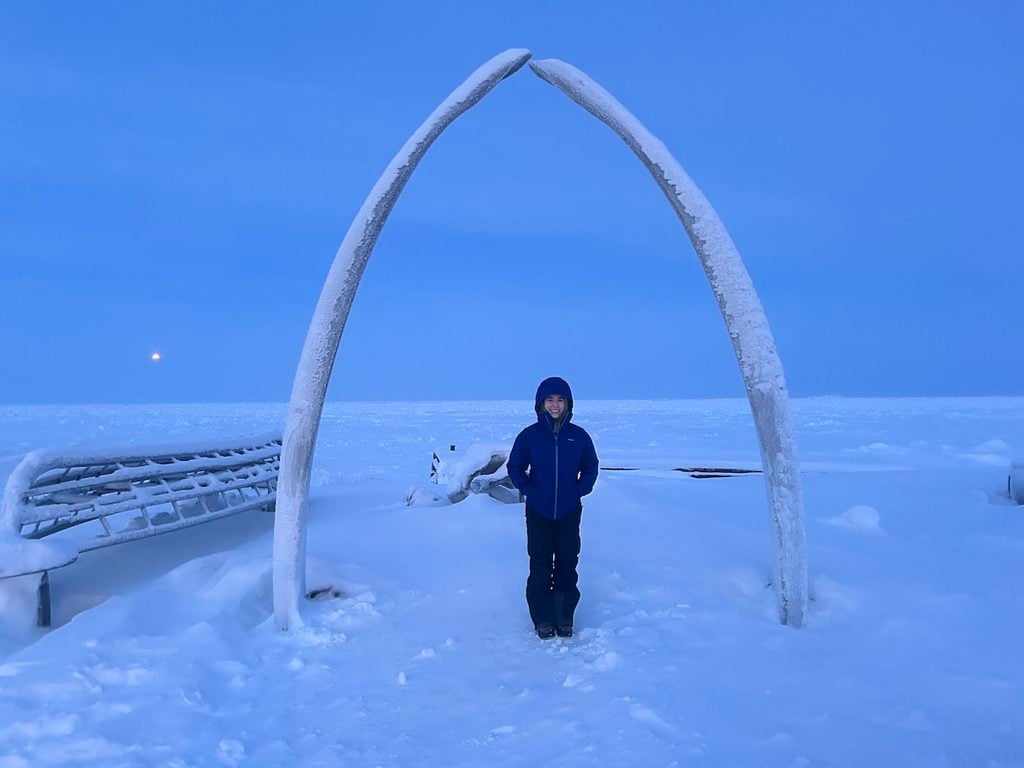
At a nonprofit salmon hatchery on a remote island in Alaska’s Prince William Sound, Moya helped raise smolts and repair nets that sea lions tore open to get them. One came close enough while she was snorkeling to touch her fins. Another time, a black bear blocked her path off a raceway until her manager fired a flare to move it along.
Then, at Colorado Parks and Wildlife, she watched the debate around gray wolf reintroduction turn scientific questions into political ones.
Those experiences didn’t necessarily look connected at the time. But, in addition to supplying some compelling resume material, they were forcing her to ask what happens to the work scientists produce after they publish their research.
Where the research goes
Moya was about to begin her work with Colorado Parks and Wildlife when a colleague passed along information about a fully funded master’s program at the University of Southern Mississippi’s Gulf Coast Research Laboratory. “On a whim,” she applied.
Conversations with lab director Dr. Eric Powell and his former students convinced her the time had come to return to school, and Moya moved to Ocean Springs, Mississippi.
There, her research focused on fisheries modeling, including how offshore wind development and changes in harvest-size regulations could affect the Atlantic surfclam fishery. She arrived without modeling experience and began learning code and scripts to make the work possible, suddenly grateful for all the math she’d taken at Western.
But the deeper she got into the research, the more interested she became in what happened to the information they produced, who made those decisions, and how research informed policy. Less than a year into graduate school, Moya was encouraged to apply for the John A. Knauss Marine Policy Fellowship.
Named for former NOAA administrator and Sea Grant founder John A. Knauss, the fellowship is one of the nation’s premier opportunities for graduate students interested in marine science and policy. Since 1979, the highly competitive program has brought the top graduate students to Washington, D.C., for a year of hands-on experience in federal executive and legislative offices, where they work alongside the people shaping national policy on ocean, coastal, and Great Lakes resources.
She was surprised when she was selected. “Everybody in this fellowship is so incredibly intelligent,” she said. “To have my experiences recognized as valuable enough to be in this fellowship was very validating for me.”
She was still working on her thesis when she moved to Maryland to begin her Knauss Fellowship. And the way she saw the two years she’d spent bouncing between internships and technician jobs changed when she got there. What had once looked like a winding path had helped her stand out among applicants from larger universities and those with more advanced degrees, and had provided a perspective no one else had.
Now, looking back, Moya knows the 10-year-old girl staring out from the edge of the Pacific probably imagined a more direct route to the ocean. But she knows a winding path can still lead where you want to go.
“I think 10-year-old me would be pretty proud, but also pretty confused about the random adventures I’ve had along the way,” she said. “But that’s part of the journey. The path might not always be straight, and that’s okay.”
Author Credit: Seth Mensing